20 November 2026
Key things to verify before booking a hot air balloon ride in Dubai
Presented by @dubaiballoonridespace
Floating quietly above the desert at sunrise sounds like a dream, and in Dubai it can be exactly that. The vast dunes, the sudden pop of a burner flame, and the calm of drifting with the wind create an experience that stays with you long after you land. But not every ride is the same. The operator you choose, the weather conditions on the morning, and the type of basket you fly in all shape what you get. Before you commit to a flight, it pays to know what to look for. Here are the things worth checking so that your morning in the sky is safe, comfortable, and memorable for the right reasons.
Operator credentials and safety record
A hot air balloon ride depends entirely on the skill of the pilot and the condition of the equipment. In the UAE, reputable operators hold certifications from the General Civil Aviation Authority (GCAA) and follow strict maintenance schedules. Before you book, confirm that the company publishes its licence number or mentions its GCAA approval. A pilot who has logged hundreds of hours over the Dubai desert knows how to read wind direction, choose a safe launch site, and handle the unusual thermals that can develop over sand. You are not expected to become an expert, but a quick check on the operator's public safety record or any recent incident reports gives you peace of mind. If the company is vague about its credentials, that is a red flag.
Cancellation and weather policies
Hot air ballooning is entirely at the mercy of the weather. A flight can only happen when the wind speed is low, visibility is clear, and the morning temperature is within a safe range. In Dubai, summer months bring intense heat and occasional dust storms, while winter mornings can be foggy. A good operator will have a transparent cancellation policy: if conditions are not right on the day, you should be offered a full refund or a rebooking without penalty. Check this before you pay. Some companies try to fly in marginal weather to avoid losing revenue, and that is when accidents happen. If the operator does not mention a weather clause in its terms, ask directly. A professional company will explain its decision-making process and will never pressure you to fly when the pilot is uncomfortable with the conditions.

The pre-flight assembly and briefing
The morning of your ride starts before dawn. You are driven to a launch site, often in the desert near the savannah terrain that surrounds the city. There, the crew unpacks the balloon and lays it flat across the sand. The pre-flight assembly involves inflating the envelope with cold air using a large fan, then heating it with the burner system until it stands upright. This process takes about twenty minutes. A thorough operator uses this time to brief passengers on the landing procedure: what to hold onto, how to bend your knees, and what to expect when the basket touches the ground. If the crew rushes through the briefing or skips it entirely, consider that a warning sign. The briefing is where you learn the signals the pilot will use and the correct way to brace yourself. A good pilot treats it as seriously as the flight itself.
Basket size and passenger harnesses
Baskets come in different sizes. A standard basket carries between eight and sixteen passengers, divided into compartments. Smaller baskets feel more intimate and give you better access to the edge for photographs. Larger baskets can feel crowded, especially when everyone moves to one side to look at something. Ask how many passengers will be in your basket. Also check whether the operator provides a passenger harness that fits securely. In some baskets, you stand in a compartment with a padded side that comes up to your waist, and there is a strap or a handle to hold during landing. The harness should not restrict your movement but should keep you stable when the basket bumps on touchdown. If you are unsure about the fit, ask to see the harness before you climb in.
Another detail worth checking is the basket's overall condition. Baskets are made of woven wicker or synthetic material, and they take a lot of wear from repeated landings. Cracks, splinters, or frayed edges suggest that the operator is not maintaining its equipment properly. A well-cared-for basket will look solid and clean, with no obvious damage. The same goes for the burner system: the pilot should do a visual check of the burners before each flight, and you can observe this during the pre-flight assembly.
What the view actually looks like
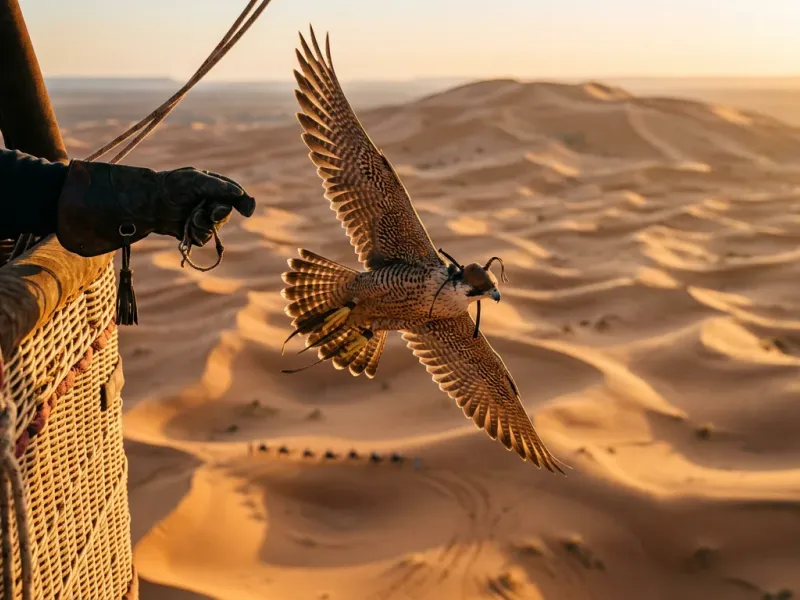
The top-of-canopy view is the main reason people book a balloon ride. From the basket, you see the desert stretched out below, the dunes casting long shadows in the early light, and the occasional camel or oryx moving across the sand. In Dubai, the flight path usually takes you over the conservation areas around the Dubai Desert Conservation Reserve, where development is limited and the landscape remains natural. The view is spectacular, but it depends on the weather. Fog can reduce visibility to a few hundred metres, and haze from construction dust can soften the colours. Ask the operator what the typical visibility is on the days you are considering. They will have a good sense of the seasonal patterns. If you really want clear views, book during the cooler months from October to April, when the morning air is crisp and the dust settles overnight.
The landing procedure and post-flight experience
The landing is the most physically demanding part of the flight. The pilot looks for a clear flat area, often on a dirt track or a patch of sand, and brings the balloon down. The basket may drag for a few metres or tip onto its side as the wind pushes it. A good landing is controlled but rarely soft. You should know beforehand that you will need to bend your knees, hold the harness or the basket ropes, and stay in your compartment until the pilot says it is safe to get out. Some operators include a short champagne toast or a light breakfast after the flight. Others hand you a certificate and drive you back. Neither is a sign of quality, but a company that takes the time to celebrate the landing with you shows that it values the whole experience, not just the flight itself.
Reading reviews and asking around
Online reviews can tell you a lot, but they need to be read with care. A five-star rating from someone who flew on a perfect morning does not tell you how the operator handled a windy day or a cancelled flight. Look for reviews that mention the pre-flight briefing, the condition of the basket, and how the crew handled the landing. Also check whether recent reviews mention the same pilot by name. If the operator has a high turnover of pilots, that can affect consistency. A good place to start is the operator's own website; many publish testimonials, but you can cross-check them on independent travel forums. The site hotairballoondubai.co compiles information on local balloon operators and gives you a way to compare their offerings side by side. It is worth a visit before you decide.
What time you need to be ready
Most balloon rides in Dubai start around 4:00 or 4:30 am. You will be picked up from your hotel or a meeting point, driven to the launch site, and then spend about an hour in the air. The entire morning lasts from pick-up to drop-off around three to four hours. If you are not a morning person, this can be a challenge. But the early start is necessary because the best flying conditions happen just after sunrise, when the air is still and the morning temperature is low. By mid-morning, the sun heats the sand and creates thermals that make the balloon harder to control. So the early wake-up is part of the deal. Check the exact pick-up time and make sure you can be ready. Missing the pickup means missing the flight, and most operators do not offer refunds for no-shows.
Dressing for the flight
In Dubai, the temperature difference between the ground and the air can be noticeable. At launch, it may be cool enough for a light jacket. Once you are in the air, the burner system keeps the basket warm, but your hands and face can feel the breeze. Closed-toe shoes are essential because you will stand for the whole flight and the landing can be bumpy. Sandals or flip-flops are a bad idea. A hat is useful to keep the sun off your face, but make sure it is one that will not blow away. If you wear sunglasses, bring a strap. The operator will usually provide a checklist of what to wear, but if they do not, ask. Being comfortable makes the experience much better.
Before you finalise your booking, take a moment to look at the bigger picture. A hot air balloon ride in Dubai is not an everyday activity. It costs time, money, and an early start. Choosing the right operator, checking the weather policy, and understanding the pre-flight routine all help ensure that the morning goes smoothly. The desert is beautiful from any height, but it is most beautiful when you are relaxed and confident in the hands of a professional crew. Taking a few minutes to verify these points will let you enjoy the flight without worrying about the details. For a deeper look at what each operator offers, a resource like hotairballoondubai.co can help you compare your options and make an informed choice.